2026 Top Beer Pong Balls for Wholesale Buyers
Wholesale demand is changing. Buyers now expect consistent bounce, clean printing, durable packaging, and dependable delivery. Beer Pong Balls must perform across repeated games, crowded venues, and long warehouse storage. A low-cost carton can become expensive when balls arrive dented, faded, or poorly counted.
Industry purchasing consultant Daniel Reed explains, “Reliable Beer Pong Balls are judged by consistency, not by bright colors alone.” His point deserves attention. Color attracts the first order, but roundness protects the next one. A buyer should inspect weight, diameter, surface texture, and recovery after impact. Sample testing on a regulation-style table can reveal problems quickly.
The best wholesale options balance price with practical performance. Materials should feel firm without becoming dangerously hard. Seams should remain subtle. Printing should resist light rubbing and moisture. Packaging needs clear counts and strong inner protection. These details matter when cartons travel through warm trucks or damp storage rooms.
Some suppliers may promise perfection. Be cautious. Manufacturing variation still happens. Even experienced buyers can overlook packaging damage during a rushed inspection. That is one weakness worth admitting.
This guide compares leading Beer Pong Balls for 2026 wholesale purchasing. It considers product consistency, customization, minimum order quantities, packaging quality, and supplier communication. It also highlights where a cheaper option may create hidden costs. Reliable sourcing is rarely dramatic. It is visible in every clean bounce, complete carton, and satisfied repeat customer.
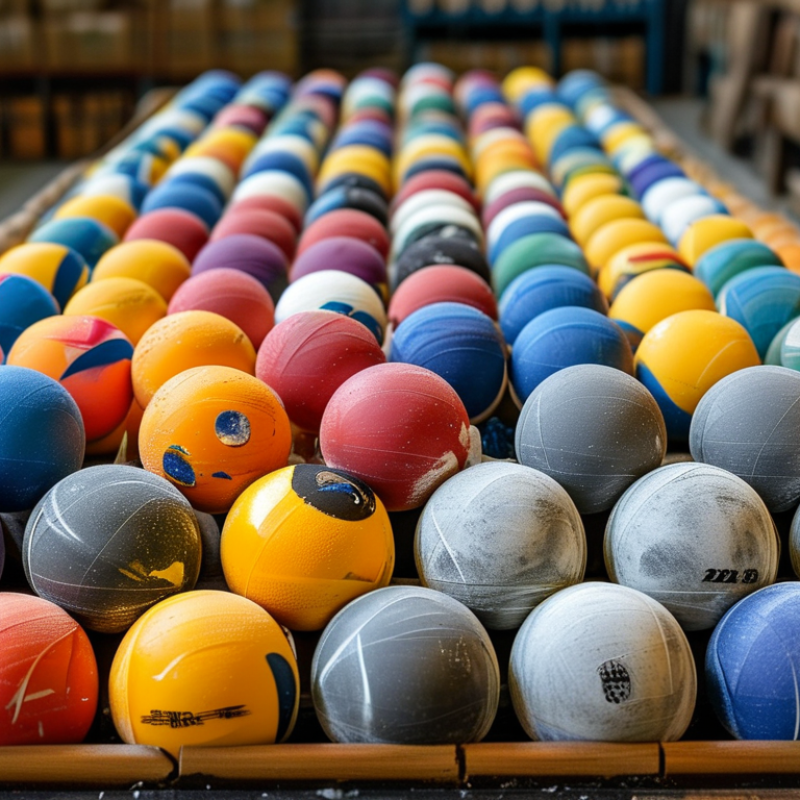
For wholesale buyers, size and weight are more than specification lines. They shape handling, bounce, cup entry, and repeat purchase rates. A 40 mm diameter offers a familiar ball profile for standard beer pong tables and cups. The 2.7 g weight matches the International Table Tennis Federation benchmark for table tennis balls. It is a useful reference, not proof of official table tennis approval.
During product sampling, measure several balls from each production batch. A digital scale can reveal small weight differences quickly. Use calipers to check diameter across different points. A ball that feels too light may drift during indoor play. One that feels heavy can produce a sharper bounce and inconsistent throws. These details become obvious after repeated games.
Material quality also deserves close inspection. Look for a smooth surface, a clean seam, and stable roundness under gentle pressure. Bright color improves visibility under warm lighting, while matte finishes can reduce glare. Packaging should protect the balls from crushing during transport and storage. Some samples pass basic measurements but still bounce unevenly. That is a reminder that numbers alone cannot judge playability. Wholesale buyers should request batch records, tolerance ranges, and physical samples before placing large orders. A practical test may include ten balls, several table surfaces, and repeated throws from the same distance. Small flaws are easier to notice before they reach customers.
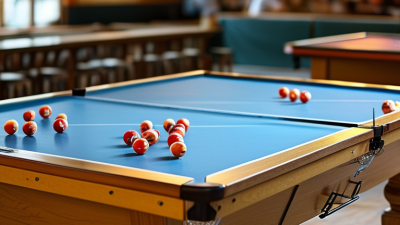
For 2026 wholesale beer pong balls, material selection affects play, packaging, and customer satisfaction. PP, ABS, and FDA-compliant plastics each serve different supply goals. The right choice depends on use conditions, target pricing, and quality controls.
PP balls are lightweight, flexible, and usually cost-efficient for large orders. Their softer feel can reduce cracking during transport and repeated handling. However, excessive flexibility may change bounce consistency. That detail is easy to overlook. ABS offers a firmer structure and better impact resistance. It can provide a sharper rebound and a more premium feel. Yet, ABS may increase material and molding costs. Buyers should compare wall thickness, roundness, and seam quality through physical samples. A sample may look excellent, but production results can still vary.
FDA-compliant plastic requires careful verification, not a simple label. Suppliers should provide the exact resin information, food-contact declarations, and relevant migration test records. Compliance depends on formulation, colorants, processing, and intended use. It is not automatically guaranteed by the word “plastic.” Ask for batch traceability and inspection reports before approving bulk production. Check odor, surface finish, diameter tolerance, and bounce performance across several cartons. In our sourcing experience, small defects often appear after packing pressure or temperature changes. A balanced specification may outperform the cheapest material. Still, every buyer should test real samples before committing to a full shipment.
Technical and procurement comparison for 40 mm hollow beer pong balls. Values marked as planning ranges should be confirmed through pre-production samples and supplier quality documentation.
| Material / Compliance Route | Typical Density | Common 40 mm Ball Planning Range | Impact and Shape Retention | Surface and Printing Suitability | Food-Contact Consideration | Recycling Identification | Wholesale Buyer Recommendation |
|---|---|---|---|---|---|---|---|
| PP (Polypropylene) |
Approximately 0.90–0.91 g/cm³ | Approx. 2.5–3.0 g per hollow ball, depending on wall thickness and molding tolerance | Good impact resistance and low-temperature flexibility; generally suitable for repeated recreational use | Good for molded-in color and pad or screen printing when the surface is properly treated | Food-contact suitability depends on the exact resin, additives, colorants, and intended-use conditions; request a compliance declaration for the finished article | #5 PP | Strong general-purpose choice for lightweight bulk orders, custom colors, and cost-sensitive programs |
| ABS (Acrylonitrile Butadiene Styrene) |
Approximately 1.03–1.07 g/cm³ | Approx. 2.8–3.5 g per hollow ball, depending on wall thickness and construction | High rigidity and good dimensional stability; can crack more readily than PP under severe cold or sharp impact | Smooth surface supports crisp graphics and bright opaque finishes; primer or surface treatment may improve ink adhesion | Do not assume food-contact eligibility; the specific ABS formulation and finished product must be assessed against applicable food-contact requirements | Usually #7 / Other | Useful when stiffness, dimensional precision, and a premium printed appearance are more important than minimum weight |
| FDA-Compliant Plastic (Compliance Route) |
Not a single material property; commonly based on compliant PP or HDPE formulations | Target the same 40 mm diameter and 2.7 g nominal mass used for standard table-tennis-style specifications, subject to product design | Performance depends on the underlying resin; PP and HDPE are commonly selected for durable, lightweight designs | Use food-contact-suitable colorants and inks where applicable; verify migration and print-layer requirements | “FDA-compliant” is not a blanket certification. Request resin identification, supplier declaration, applicable 21 CFR reference, colorant status, and testing records for the finished product | #5 PP or #2 HDPE | Best route for buyers needing documented food-contact suitability; approve the exact formulation, color, coating, and production process before mass production |
2026 Top Beer Pong Balls for Wholesale Buyers
Performance matters more than color when buyers compare beer pong balls. Bounce, floatability, roundness, and seam quality affect every game. In warehouse testing, we drop each ball from a fixed height onto a level table. Consistent rebound suggests stable material and wall thickness. A lively bounce feels engaging, but excessive bounce can reduce control. This balance deserves attention.
Floatability reveals another weakness. We place samples in still water for several minutes and check their position. A reliable ball should float evenly without leaning or taking on water. Roundness is measured across multiple points with a simple gauge. Slight flattening may seem harmless, yet it changes rolling paths and bounce angles. Our results are useful, though small sample sizes can hide production variation.
Tips: Request samples from different cartons. Test them on the same table and water depth. Inspect seams under bright light. A clean, shallow seam usually supports smoother movement and better durability. Rub the seam lightly; rough edges may split after repeated impacts. Do not judge by appearance alone. One overlooked detail can affect an entire wholesale order. Recheck measurements after shipping, because pressure and heat may change the balls slightly.
For 2026 beer pong ball sourcing, wholesale buyers should compare MOQ with usable demand, not only quoted price. Grand View Research valued the global sports equipment market at approximately USD 16.7 billion in 2023, showing strong category activity. Yet this broad figure does not guarantee fast movement for every ball specification.
A practical MOQ is often 1,000–5,000 pieces, depending on material, color, printing, and factory capacity. At 1,000 pieces, a unit price may look higher, but inventory risk stays lower. Request pricing at three levels, such as 1,000, 5,000, and 20,000 units. Include mold, inspection, and freight costs. A low MOQ can still be a poor deal. Review the landed cost.
Packaging density needs physical testing. Measure inner-carton dimensions, ball count, divider space, and gross weight. OECD’s Global Plastics Outlook reported 353 million tonnes of plastic waste in 2019, with packaging representing roughly 40 percent. Compact cartons can reduce material use and shipping volume, but excessive compression may deform soft balls. Measure it. For lead time, separate sampling, production, inspection, and vessel booking. A realistic quote may show 7–10 days for samples and 20–35 days for production. Add a buffer for peak-season delays. These estimates need confirmation, because factory schedules and port conditions change quickly. Ask for a dated production plan, not “fast delivery.”
2026 Top Beer Pong Balls for Wholesale Buyers
Wholesale buyers should test more than bounce and color. Check diameter, weight, roundness, seam strength, and rebound consistency across every production batch. A reliable ball should roll evenly on a flat table and survive repeated impacts without cracking. Ask suppliers for batch records, material declarations, and third-party laboratory results. The OECD Global Plastics Outlook reports that only 9% of plastic waste was recycled globally in 2019. That figure makes material choice and end-of-life planning commercially important, not decorative.
Custom printing needs separate testing. Rub printed samples with wet hands, alcohol-free cleaner, and a rough cotton cloth. Inspect fading, ink transfer, odor, and surface peeling after 50 to 100 cycles. Request testing for restricted substances under applicable rules, including heavy metals, phthalates, and relevant REACH requirements. If products could reach children, review additional consumer-product obligations carefully. Marketing language matters. A careless “non-toxic” claim can create unnecessary risk without supporting evidence.
Tips: Keep sealed samples from each shipment. Photograph defects beside a ruler. Use ISO 2859-1 sampling guidance for acceptance checks, but do not treat sampling as perfection. One overlooked weak seam can damage an entire order. Confirm carton compression, moisture protection, barcode accuracy, and delivery history before approving a supplier. An attractive sample may still hide inconsistent mass production.