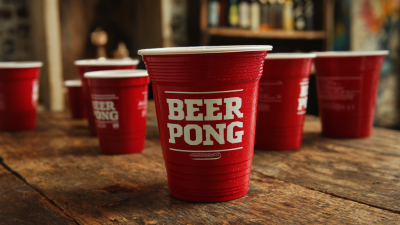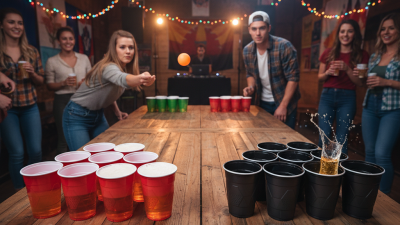
Choosing Reusable Beer Pong Cups for global markets requires more than comparing colors, prices, and printed logos. Buyers must examine material safety, durability, capacity, stacking design, and cleaning performance. A cup may look attractive in a product photo, yet fail after repeated washing or rough event handling.
Tom Szaky, founder of TerraCycle, has emphasized, “The most sustainable product is the one that already exists.” This principle supports reusable purchasing decisions. A reliable cup should survive many game nights, transportation cycles, and commercial cleaning routines. Look for food-contact-grade plastics, stable rims, reinforced bases, and surfaces that resist staining from beer, soft drinks, and colored beverages. Small details matter.
Global buyers also need practical evidence. Request samples before ordering. Test the cups under real conditions. Check whether they stack tightly, dry quickly, and retain printed graphics after washing. Confirm packaging dimensions, carton strength, minimum order quantities, and shipping weight. Suppliers should provide clear material information and consistent production records.
No product is perfect.
Reusable Beer Pong Cups can reduce disposable waste, but their benefits depend on repeated use. Poor durability, limited washing access, or excessive shipping distances may weaken the environmental value. Buyers should question attractive sustainability claims and request measurable information. Regional preferences also vary. A bright red cup may suit a festival, while a neutral design may fit hospitality venues. This guide explores how to balance performance, hygiene, branding, cost, and responsible sourcing when selecting Reusable Beer Pong Cups for international distribution.
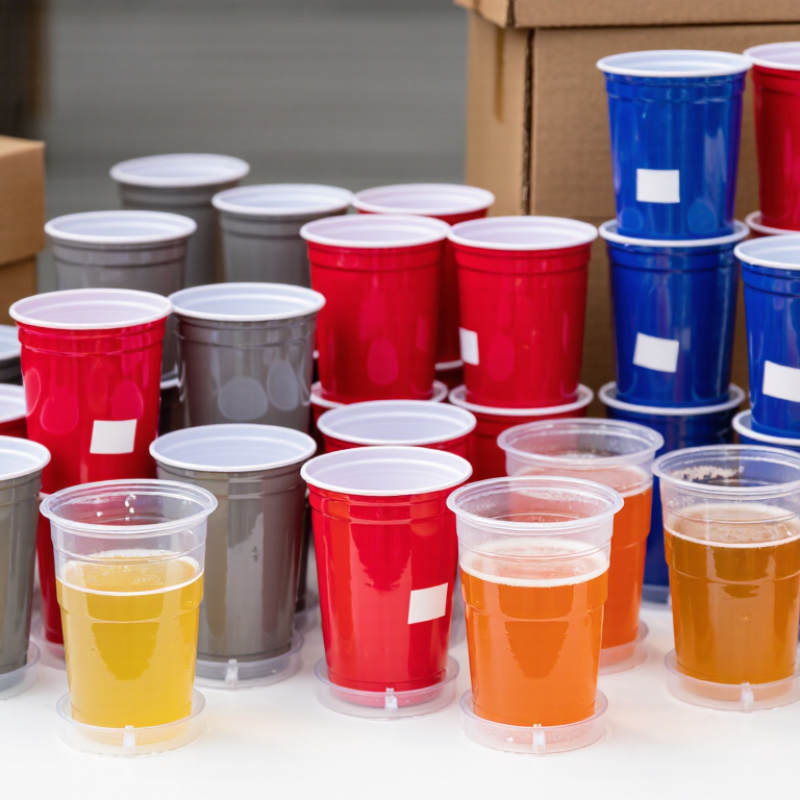
Material choice affects durability, safety, shipping weight, and user experience. Polypropylene is a practical option because it is light, flexible, and suitable for repeated washing when properly processed. Copolyester offers clearer walls and better visual appeal, but it may cost more. Stainless steel lasts longer, yet it removes transparency and can increase freight weight. Global buyers should request food-contact test reports, dishwasher-cycle results, and migration documentation for the target market.
Design details often decide whether a cup survives real events. A reinforced rim helps prevent cracks during stacking and handling. A slightly weighted base improves stability on wet tables. Smooth inner surfaces reduce residue, while nesting shapes save warehouse space. Color coding can separate teams without printed coatings that wear away. A 16-ounce capacity is common, but regional event formats may differ. That assumption needs checking.
The OECD Global Plastics Outlook reports that only 9% of plastic waste was recycled globally in 2019. Reuse matters, but only when cups survive many cycles. UNEP’s 2023 Turning off the Tap report estimates that reuse models could reduce plastic pollution by 30% by 2040. Buyers should calculate expected washing cycles, replacement rates, and transport emissions. “Reusable” is not automatically sustainable. I have seen attractive cups fail at the rim after repeated commercial washing. Small pilot tests reveal more than polished samples. Request independent testing, not only supplier claims.
Global buyers should evaluate reusable beer pong cups by performance, not appearance alone. A 16-ounce cup offers a familiar balance for parties and hospitality venues. Smaller cups reduce liquid use but may feel unstable during play. Check the rim diameter, base width, and wall height together. A wide base resists tipping, while a tapered shape supports nesting. However, overly narrow cups can hold firmly and release poorly from a stack. The right shape depends on storage space, filling speed, and user comfort.
Tips: Request samples before ordering. Measure filled and empty cups. Test ten stacking cycles. Inspect the rims after washing. Confirm food-contact documents for each target market. Also check carton dimensions, because efficient stacking can lower shipping volume.
Durability deserves practical testing. Drop filled cups from table height, squeeze the sidewalls, and run repeated dishwasher cycles if applicable. Look for whitening, cracks, warped rims, or fading measurement marks. Material thickness matters, but thicker does not always mean stronger. Poor molding can create weak points near the base. Reusable products also need easy cleaning, since deep corners may retain residue. I have found that “unbreakable” claims often need careful questioning. No cup is perfect. Buyers should compare test results, expected use, and replacement rates before choosing a long-term design.
| Reusable Cup Profile | Typical Capacity | Top Diameter | Height | Shape and Stability | Common Material | Typical Wall Thickness | Impact Durability | Dishwasher Suitability | Stackability | Approx. Stack Height for 25 Cups | Best Buyer Application |
|---|---|---|---|---|---|---|---|---|---|---|---|
| Standard Tournament Cup | 16 oz / 473 mL | 3.75 in / 95 mm | 4.75 in / 121 mm | Wide upper body with a tapered base; good balance between target visibility and table stability. | Reusable polypropylene (PP) | 0.8–1.2 mm | High | Usually suitable on the top rack; confirm the supplier's heat rating. | Very good | Approximately 10–13 in / 25–33 cm | General events, rental fleets, sports bars, and tournament organizers. |
| Large Party Cup | 18 oz / 532 mL | 4.00 in / 102 mm | 5.00 in / 127 mm | Broad opening and larger liquid volume; stable when placed on full-size beer-pong tables. | Reusable polypropylene (PP) | 0.9–1.3 mm | High | Generally suitable on the top rack when manufactured with heat-resistant PP. | Good | Approximately 11–14 in / 28–36 cm | Large social events where fewer refills and higher visual impact are preferred. |
| Compact Travel Cup | 12 oz / 355 mL | 3.35 in / 85 mm | 4.15 in / 105 mm | Narrower footprint reduces packing volume; lighter construction may be less stable on uneven surfaces. | Reusable polypropylene (PP) | 0.7–1.0 mm | Medium to high | Top-rack washing is commonly recommended; avoid high-temperature drying unless approved. | Excellent | Approximately 8–10 in / 20–25 cm | Travel kits, outdoor promotions, camping events, and compact retail packaging. |
| Rigid Premium Cup | 16 oz / 473 mL | 3.80 in / 97 mm | 4.80 in / 122 mm | Thicker rim and reinforced base provide a firm feel and strong resistance to deformation. | Reusable polycarbonate (PC) | 1.5–2.0 mm | Very high | Often dishwasher-compatible; verify the supplier's maximum wash temperature. | Good | Approximately 12–15 in / 30–38 cm | High-frequency rental use, hospitality venues, and buyers prioritizing long service life. |
| Flexible Outdoor Cup | 16 oz / 473 mL | 3.70 in / 94 mm | 4.65 in / 118 mm | Slightly flexible walls absorb impact; a flared base improves grip on outdoor tables. | Reusable thermoplastic elastomer (TPE) or flexible PP | 1.0–1.5 mm | High | Usually easy to clean; confirm compatibility with commercial dishwashers. | Good | Approximately 11–14 in / 28–36 cm | Beach venues, festivals, pool areas, and events where drop resistance is important. |
| Clear Display Cup | 16 oz / 473 mL | 3.75 in / 95 mm | 4.75 in / 121 mm | Transparent, tapered profile improves liquid visibility; stability depends on base width and wall rigidity. | Reusable polycarbonate (PC) or copolyester | 1.2–1.8 mm | Very high | Frequently dishwasher-compatible, but repeated high heat may reduce optical clarity over time. | Good | Approximately 11–14 in / 28–36 cm | Product demonstrations, branded-neutral event packages, and venues requiring visible contents. |
For global buyers, a reusable beer pong cup is a food-contact product, not merely a party accessory. The material should be clearly identified, such as polypropylene or stainless steel. Ask for test reports covering overall migration and relevant substances. Confirm the test medium, temperature, and contact time match actual use. A report from one market may not satisfy another.
Check the destination country’s food-contact rules before placing a large order. Requirements can differ for plastics, colorants, recycled content, labeling, and documentation. Depending on the market, buyers may need local declarations or specific testing evidence. Request a declaration of compliance, batch traceability, and an independent laboratory report. The supplier should explain production controls, cleaning guidance, and maximum reuse conditions. Small details matter.
During sampling, wash cups repeatedly and inspect for cracks, odor, clouding, and warping. Test them after realistic dishwasher cycles, if dishwasher use is advertised. I once focused too heavily on a passing material report and overlooked a loose printed mark. That was a useful warning. Compliance is not only paperwork. It depends on the finished cup, packaging, instructions, and supply consistency. Keep current documents, record corrective actions, and review requirements whenever the sales region changes.
How to Choose Reusable Beer Pong Cups for Global Buyers?
Global buyers should compare suppliers beyond unit price. A dependable supplier explains material grades, production capacity, and quality controls clearly. Ask whether the cups use food-contact compliant plastic and request current test documents. Certificates matter, but factory communication matters too. Slow answers can signal later problems.
Customization affects both cost and production timing. Suppliers may offer one-color printing, full-wrap graphics, molded logos, or custom packaging. Simple logos usually need fewer setup steps. Full-wrap designs require careful artwork checks and color approval. Request a physical sample before bulk production. Digital images can hide weak printing or inaccurate colors. That detail is easy to miss.
Minimum order quantities need careful comparison. A low MOQ may suit market testing, but the unit cost can rise sharply. Higher MOQs may reduce pricing while increasing storage pressure and cash exposure. Ask for separate quotes at several quantities, such as 500, 2,000, and 10,000 pieces. Include tooling, printing plates, packaging, and shipping fees. Otherwise, the “cheap” offer may not be cheap.
One practical lesson: confirm carton dimensions early. A supplier once delivered attractive samples, but the final cartons required more warehouse space than expected. That mistake was avoidable. Buyers should also confirm color tolerance, replacement terms, lead times, and inspection procedures in writing. A short checklist can prevent expensive misunderstandings across borders.
For global buyers, reusable beer pong cups should be judged by total landed cost, not unit price alone. Include production, packaging, inland transport, freight, duties, inspection, washing, and replacement costs. The OECD’s Global Plastics Outlook reports that only about 9% of plastic waste has been recycled. Durable, recyclable materials therefore deserve closer attention.
Consider 1,000 cups priced at $0.85 each. A $180 freight charge adds $0.18 per cup before taxes. If each cup survives 20 events, its product cost falls to about $0.05 per use. Washing still matters. Water, labor, storage, and damage can change the calculation quickly. My estimate can be wrong without local utility and labor rates.
Shipping design also affects long-term value. Stackable cups reduce carton volume and dimensional-weight charges. The UNCTAD Review of Maritime Transport 2024 highlights continuing freight-market volatility and route disruption. Request carton dimensions, gross weight, loading quantity, and replacement terms before ordering. Ask for food-contact documentation and test samples under repeated washing. A cup that warps after several cycles creates hidden costs. It also creates unhappy event operators. Not ideal.