What is Cup Pong and How to Play It?
Cup Pong is a fun, engaging game that has gained popularity at parties and social gatherings. This exciting activity requires players to throw a ball into cups filled with water or other beverages. Simple yet addictive, Cup Pong is suitable for people of all ages.
When you set up the game, you’ll need a table and plastic cups arranged in a triangle formation. As players take turns tossing the ball, the tension in the air builds. Missing your shot can lead to laughter and playful banter. Each successful toss brings cheers and creates a lively atmosphere that encourages friendly competition.
Although Cup Pong seems straightforward, it can be trickier than it appears. Not everyone masters the art of tossing. Some players may feel frustrated or embarrassed after multiple misses. Reflecting on these moments can help improve your technique. Overall, Cup Pong is more than just a game—it's a chance to connect, laugh, and enjoy friendly rivalry with friends.
What is Cup Pong?
Cup Pong is a popular party game that brings fun and excitement. Players take turns throwing a ball into a pyramid of cups filled with a beverage. The cups are typically arranged on a table. Once a ball lands in a cup, the opposing team must drink the contents. The last team with cups standing wins. It’s simple yet engaging for everyone involved.
Playing Cup Pong involves some skill. A steady hand and aim are important. Practice can help improve your throwing technique. However, do not forget that the game should be light-hearted. Getting too competitive can detract from the fun. Keep the atmosphere friendly and enjoyable for all participants.
**Tips:** Use lightweight, plastic balls for easier throws. Form a strategy with your teammate. Communicate about your throws and watch each other’s backs. If a ball lands in a cup, take your time to celebrate or even dance a little. Embrace the fun moments, even if you miss a shot sometimes. Everyone loves a good laugh!
What is Cup Pong and How to Play It?
| Aspect |
Details |
| Game Type |
Drinking Game |
| Players |
2-10 players |
| Equipment |
Plastic Cups, Ping Pong Balls, Table |
| Objective |
Throw balls into opponent's cups |
| Winning |
Eliminate all opponent's cups |
| Common Rules |
Re-racking, Bounce shots, and Redemption |
| Popular Variants |
Flip Cup, Beer Pong, and Stack Cup |
The History and Origins of Cup Pong
Cup Pong, known for its fun and casual vibe, has an interesting history. The game likely traces its roots to the early 2000s. Popular college parties often had this lively activity. It involved players throwing a ball into cups filled with liquid. The simplicity of the setup made it widely appealing.
The exact origins are debated. Some say it’s inspired by beer pong, a game that has been around for decades. Others argue it evolved from various drinking games that predate it. Regardless of its beginnings, Cup Pong became a staple at social gatherings. People enjoyed both competition and camaraderie.
The game’s evolution reflects changing social scenes. Initially, it might have seemed straightforward. With time, variations emerged. Players developed unique rules and styles. This creativity added depth to the game. However, the focus on fun sometimes led to disputes over rules. Players sometimes forgot the original spirit, which is all about enjoying time with friends.
Essential Equipment for Playing Cup Pong
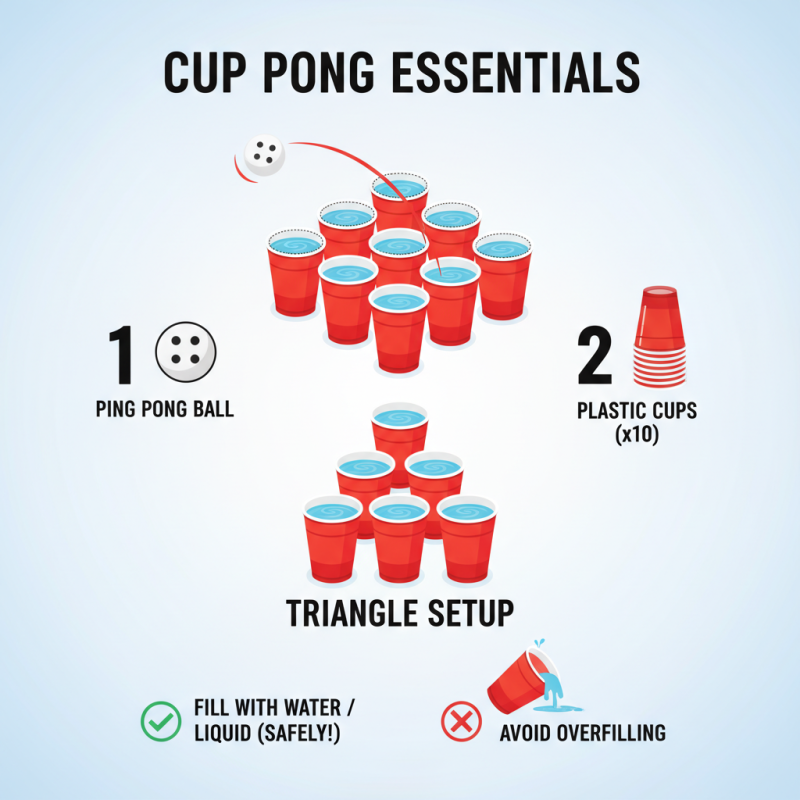
To play Cup Pong, you need some essential equipment. The core of the game is a ping pong ball and plastic cups. Usually, you want to set up 10 cups in a triangle shape. This setup is crucial for gameplay. The cups are often filled with water or another liquid. However, remember to keep it safe. Overfilling can lead to spills.
Another item you'll need is a table. A long, flat surface gives ample space for the game. Some prefer tables that are slightly elevated to create a more challenging experience. Players can become creative with their designs. After all, the aesthetic matters to some. A friend once used a colorful tablecloth, which added fun.
Do not forget about the rules. Each player takes turns throwing a ball into the cups. If you miss too many shots, frustration sets in. This aspect makes Cup Pong wild and exciting. Yet, it can quickly become discouraging if you struggle. Learning to aim takes time. Embrace the imperfections and enjoy the social aspect of the game. The laughter and cheers often outweigh the competition.
Basic Rules and Gameplay Mechanics of Cup Pong
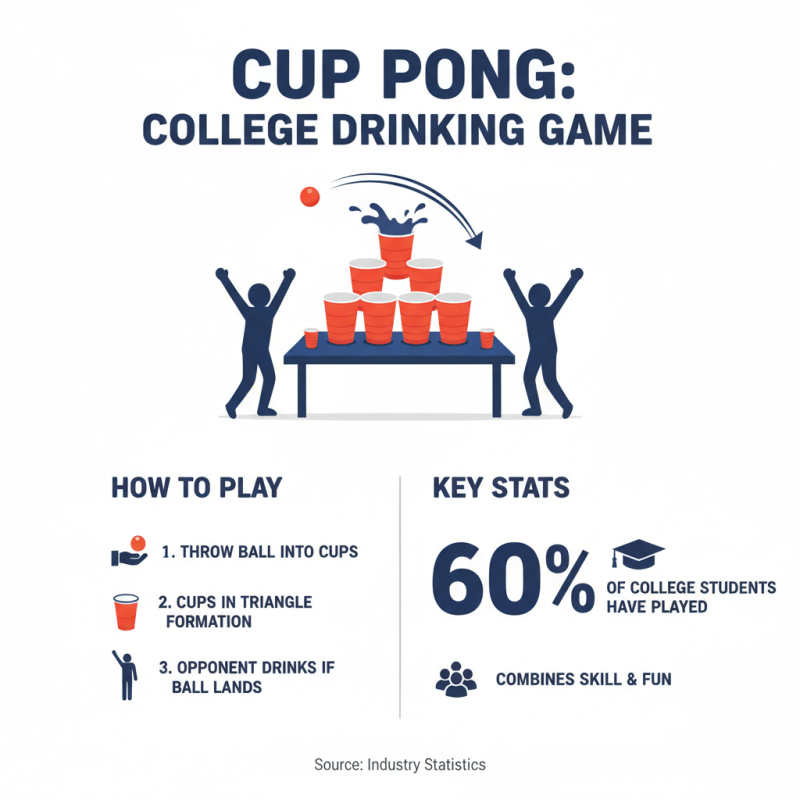
Cup Pong is a popular drinking game that combines skill and fun. The basic rules are simple. Players take turns throwing a ball into cups arranged in a triangle. Each cup can hold a beverage. When a ball lands in a cup, the opponent drinks from it. According to industry statistics, about 60% of college students have played Cup Pong at least once.
The setup involves 10 cups for each player. Proper cup spacing is key. The cups should be filled to a quarter for optimal play. Players must aim carefully and develop their technique. The game often includes house rules, which may vary widely. This fluidity can lead to confusion among players. It’s essential to clarify rules before starting.
Tips for success include practicing your throws. Try different techniques, like arc throwing versus direct shots. Stay relaxed; tension can affect precision. Also, consider your stance. A stable base improves balance. Lastly, focus on your opponent's movements. This observation can help anticipate their next shot. Being aware of these details enhances gameplay.
Strategies for Winning at Cup Pong
Cup Pong is a popular party game that combines skill with social interaction. To excel, players need effective strategies. Research indicates that mastering certain techniques significantly increases winning chances. One key aspect is cup arrangement. Positioning cups in a triangle can enhance aim and improve shooting precision.
Tips: Focus on your stance. A stable base is crucial for accuracy. Take a moment to breathe before each throw. Calmness can enhance concentration. Another vital strategy is understanding angles. Aim for the center of the cups. This increases your chances of knocking them over.
Practice is essential for success in Cup Pong. Statistics show that players who practice regularly improve their skills by up to 30%. Experiment with different throwing styles. Some players prefer underhand, while others choose overhand throws. It's important to find what works for you.
Mental preparation also plays a role. Stay positive, and visualize your success. If you miss, reflect on what went wrong. Adjust your approach for better results. Embracing these strategies can lead to consistent victories at the table.