How to Play Cup Pong Rules and Setup Guide?

Cup Pong looks simple: arrange cups, take turns, and land the ball. Yet a fair game depends on details that players often overlook. Cup placement, throwing distance, rebounding rules, and cup removal can change the entire match. This guide explains how to play Cup Pong with a clear setup, balanced rules, and practical table guidance. It also considers safer, alcohol-free formats for homes, schools, workplaces, and public events.

Scott McInnis, co-founder of the World Series of Beer Pong, has said, “Clear rules create better competition.” That principle fits every Cup Pong table. Before playing, choose identical cups, a flat surface, clean balls, and two equal teams. A standard setup commonly uses ten cups in a triangle on each side. Leave enough space between the formations for comfortable throws. Not too tight.

Players should agree on scoring before the opening shot. A successful throw usually removes one cup, while a bounce may count differently. Some groups allow rebounds, trick shots, or bonus turns. These variations are entertaining, but they can create disputes without prior agreement. Keep the rules visible. A small written card can prevent a loud argument later.

This guide will walk through setup, turn order, scoring, re-racks, fouls, and winning conditions. It will also discuss table safety and respectful play. A perfect rulebook cannot predict every situation. That is part of the lesson. Good players adjust carefully, admit unclear calls, and improve the format after each match. The goal is competitive tension without confusion. The ball matters. So does fairness.
How to Play Cup Pong Rules and Setup Guide?

Define Cup Pong’s Standard Ten-Cup Format Using WSOBP Tournament Rules

A standard ten-cup format needs consistency more than decoration.

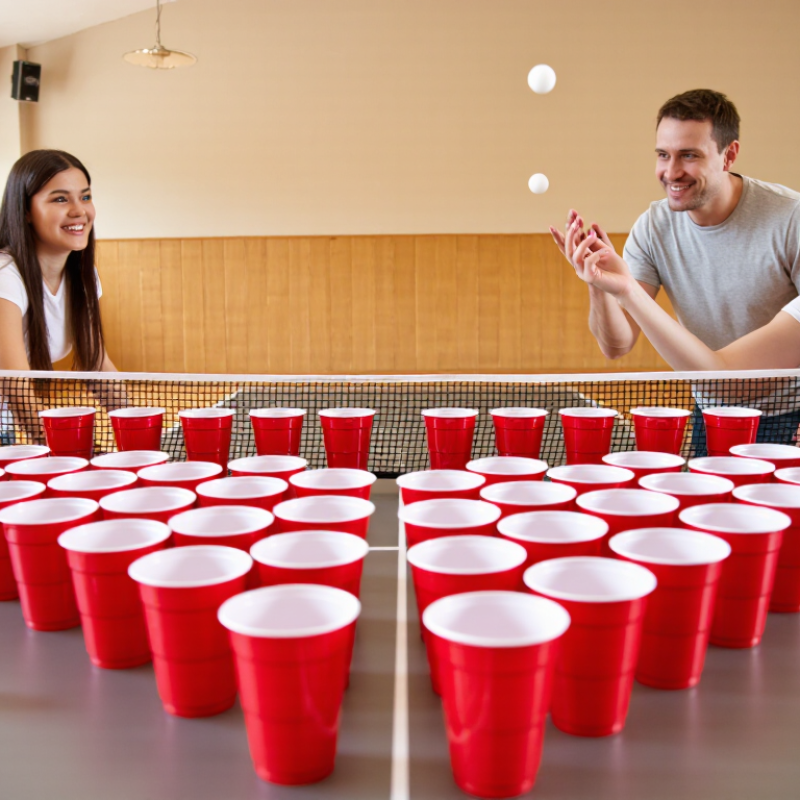
The WSOBP tournament framework places ten cups on each side, forming a tight triangle with the point facing forward. Use an eight-foot table when available. Keep the opposing cup fronts about six feet apart. Fill every cup to the same marked level with clean water. Two balls are used, and each team usually has two shots per turn.

A successful shot removes one cup. Both teammates shoot before the turn changes. Tournament-style reracks commonly occur at six, three, and one remaining cup, although the event rules should control any variation.

A team wins when every opposing cup is removed, subject to the stated rebuttal rule. Make that rule visible before play. Small misunderstandings create unnecessary arguments.

The 2024 Topline Participation Report recorded 242.1 million Americans joining at least one sport or fitness activity during 2023.

That figure supports a simple design: clear boundaries, quick turns, and easy participation. A 2022 global physical-activity report found that 31% of adults were insufficiently active. Cup pong should not pretend to replace exercise. Add standing breaks and safe walking space instead.

The triangle may look precise, but cups shift after repeated impacts. Recheck the front line between rounds. That is not perfect tournament control, yet it improves fairness.

Use nonalcoholic liquid for public, family, or mixed-age sessions. The throwing rule also deserves attention; bounce shots, distractions, and edge contacts should be settled before the first ball.

Prepare Ten Cups, Two Balls, and an Eight-Foot Tournament Table

How to Play Cup Pong Rules and Setup Guide?

Prepare ten cups, two balls, and an eight-foot tournament table. Arrange five cups at each end in a tight triangle. Keep every cup about two inches from the table edge. Add a small amount of clean water to each cup for stability, not for drinking. Use separate cups for players’ beverages. This simple choice keeps the game cleaner and safer.

Players stand behind their end line and take turns throwing one ball. A ball landing in an opponent’s cup removes that cup. The opposing player should place it aside immediately. If both players score during one round, each takes another shot. Set a clear rule before playing. Some groups allow rebounds, while others do not. Consistency matters more than complicated penalties. The team that removes all five opposing cups wins. In practice, missed shots often reveal uneven table placement or poor lighting.

Tips: Check the table before starting. An eight-foot table needs open space around all sides. Mark both end lines with removable tape. Keep the cups evenly spaced. Dry hands improve control. Use soft, lightweight balls indoors. Watch the cup rims carefully. They can shift after strong throws. I once placed the triangles too close together, and the final shots felt unfair. A quick measurement would have prevented that mistake.

Arrange Cups in a Triangle and Fill Them Under Agreed House Rules

Arrange ten cups in a triangle at each end of a sturdy table. Keep the front cup centered on the table’s edge. Leave a small gap between every cup, so players can see the shape clearly. Use the same cup size on both sides. Fill each cup with an agreed amount of water or another suitable drink. Keep it fair.

Before playing, agree on house rules. Decide whether bounced shots count, whether players receive a second attempt, and how often cups can be rearranged. A simple rule is one throw per turn, with successful shots removing one cup. If a ball lands in a cup, the opposing team removes it and follows the agreed drink rule. Clear decisions prevent arguments later.

I have found that a dry table improves control and reduces accidental spills. Keep spare liquid nearby, but avoid filling cups too high. My first setup used crowded cups, and rebounds became difficult to judge. That mistake changed my approach. Leave enough space for a clean shot and mark the table center if alignment is unclear. Players should stand behind the edge, not lean across it. Review the rules when new players join, because small assumptions can change the entire pace. Erotiske

Apply Shooting, Re-Racking, and Hit-Resolution Procedures Step by Step

How to Play Cup Pong Rules and Setup Guide?

Set up two equal rows of cups on opposite ends of a stable table. Fill each cup with a small amount of water, then arrange ten cups in a triangle. Keep extra water nearby for spills. Two players or teams stand behind their marked end lines. Before play begins, agree on scoring, re-racking times, and whether bounced shots count. Clear rules prevent arguments later.

Each team receives one ball per turn. The shooter aims with a controlled underhand motion and keeps both feet behind the line. A ball landing inside a cup counts as a hit. Remove that cup immediately and place it aside. A rim strike, miss, or ball falling outside the cup scores nothing. For hygiene, never drink from game cups. Replace spilled water before continuing.

Re-rack the remaining cups when six, four, and two cups remain, unless players choose another schedule. Use a tight triangle and keep the front cup centered. If both teammates hit their targets, resolve the result before resetting play: remove both cups, then return the balls. Some groups allow one extra shot, but this must be agreed upon beforehand. I once moved a cup too quickly after a rim touch, and the mistake changed the round. Pause, check the ball’s final position, and decide consistently. Clear communication matters more than speed.

How to Play Cup Pong Rules and Setup Guide? - Apply Shooting, Re-Racking, and Hit-Resolution Procedures Step by Step

Step Game Phase Standard Rule or Dimension Required Action Hit Resolution
1 Prepare the table Use a stable, level table approximately 6–8 ft long and about 2–3 ft wide. Place the table in an open area and remove obstacles around both ends. No cups are removed during setup; the table should remain stable throughout play.
2 Arrange the cups Each team commonly begins with 10 cups arranged in a triangular formation. Set the point of the triangle toward the opposing team and keep the cups close together. Align the cups before the opening shot; cups that are unstable should be repositioned before play starts.
3 Add the contents Fill each cup with a small, consistent amount of liquid, commonly about 60–120 ml. Use a safe, non-glass cup and avoid filling cups so high that they spill easily. Replace spilled liquid as needed, but do not count a spill as a successful shot unless all players agreed beforehand.
4 Choose teams and order The common format is two teams with one or two shooters per side. Decide which team shoots first by mutual agreement, a coin toss, or a trial shot. The opening decision determines the first shooting turn and should not change during the round.
5 Start a turn Players normally shoot from behind their end of the table without reaching over the playing surface. Keep both feet behind the agreed shooting line and aim at any cup on the opponent’s side. A foot-fault rule may be used: if the shooter crosses the line, the attempt is treated as a miss.
6 Apply the shooting method A shot may be a direct throw or a bounce, depending on the agreed house rules. Release the ball toward the target and allow it to come to rest before resolving the play. A direct shot that enters a cup is usually a valid hit. A bounced shot is often worth one cup, although some groups assign different values.
7 Resolve a made shot A shot counts when the ball clearly enters the cup and remains in it or lands inside before being removed. The defending team removes the hit cup and sets it aside. One made shot normally removes one cup. If two balls are used and both are made, two cups are removed unless a different rule was agreed.
8 Resolve a miss A miss occurs when the ball does not enter a cup or when a player commits a previously defined fault. Return the ball to the shooting team or place it beside the table for the next turn. No cup is removed, and the opposing team begins its turn.
9 Change turns Teams alternate turns after all shots in the current turn have been resolved. Confirm the number of remaining cups before the next team shoots. Only clearly completed shots affect the score; disputed shots should be settled before continuing.
10 Perform a re-rack A re-rack, also called a rearrangement, groups the remaining cups into a tighter formation. Request a re-rack at an agreed cup count, commonly 6, 4, or 3 remaining cups. The defending team rearranges only the cups still in play; removed cups cannot be returned.
11 Handle a disputed hit A cup should be removed only when the ball’s entry is clearly observed. Pause the game and ask all players to agree whether the ball entered the cup. If no agreement is possible, replaying the shot is a fair pre-agreed option.
12 Reach the final cup The game continues until one team has no cups remaining. Remove the final cup when it is legally hit and record the result. The team that loses all of its cups loses the round, unless a re-rack, redemption, or overtime rule was announced before play.
13 Use optional redemption Redemption is a house rule and is not universal. If selected in advance, the losing team may attempt to hit the remaining target cups. A successful redemption may extend the game; a failed attempt confirms the loss. Define the exact number of attempts before starting.
14 Finish safely Safe play requires clear footing, unbroken cups, and a non-glass playing area. Stop play if liquid spills significantly or if equipment becomes damaged or unsafe. Clean the table and floor promptly, and dispose of damaged cups or balls before another round.

Note: Cup pong rules vary by group. Agree on the number of cups, shooting line, bounce value, re-rack points, redemption, and disputed-hit procedure before the game begins.

Track Elimination, Redemption, and NIAAA Alcohol-Safety Limits Clearly

How to Play Cup Pong Rules and Setup Guide?

Set six or ten cups in a triangle on each side of a sturdy table. Add a small amount of water to each cup for stability, not drinking. Players stand behind the table edge and take turns throwing one ball. A successful shot removes the cup from play. Agree on house rules before starting, because confusion grows quickly.

Elimination is simple: remove every cup from the opposing side to win. Redemption gives the losing team one final chance after the last cup disappears. They must land consecutive shots into the remaining cups, according to the agreed number. Miss once, and the game ends. I have seen redemption rules cause arguments, so write them down first. That small step helps.

Alcohol should never determine the score or pressure anyone to drink. The National Institute on Alcohol Abuse and Alcoholism defines one standard drink as about 14 grams of pure alcohol. That equals roughly 12 ounces of regular beer, 5 ounces of wine, or 1.5 ounces of distilled spirits. These measures are easy to underestimate. NIAAA’s low-risk limits are no more than three drinks in one day and seven weekly for women, or four daily and fourteen weekly for men. They are not targets. Less is safer. Use water or alcohol-free drinks, provide food, prevent driving, and stop play when coordination changes. The table can wait.

How to Play Cup Pong: Rules, Setup, Redemption, and Alcohol-Safety Limits

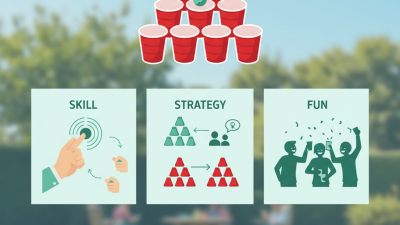
This chart separates common cup-pong setup rules from U.S. public-health reference limits. Use the safety figures as limits—not drinking targets—and follow local laws and venue policies.

Track elimination

Start with 10 cups per side. Remove a cup after a successful hit and keep score by counting the cups remaining.

Redemption

A common house rule allows one optional redemption attempt when the final cup is hit. Agree on this rule before play.

Safety reference

One U.S. standard drink contains about 14 g of pure alcohol. Daily moderation limits are 1 drink for women and 2 for men; binge-drinking thresholds are 4 and 5 drinks in about 2 hours.

Gameplay values reflect common house rules and are not universal. Alcohol thresholds are U.S. public-health reference values.