Choosing the right Beer Pong Glasses supplier in China takes more than comparing prices. Buyers should look closely at material consistency, cup capacity, rim finish, color options, and print quality. A small difference in wall thickness can affect how a cup feels and holds its shape during handling. Ask for current product samples, not just polished catalog photos. Details matter.
This guide explains how to assess suppliers using practical, verifiable criteria. It considers production capability, customization options, minimum order quantities, packaging, communication, and stated lead times. Buyers can also ask what quality checks are performed and request relevant product documentation for their market. These questions do not guarantee a smooth order, but they make comparisons more grounded. No supplier is perfect. A quick reply is useful, yet it cannot replace a clear specification or a sample review.
China has manufacturers and trading companies with different strengths, so “top” depends on the project. One may offer flexible printing, while another may suit larger repeat orders or simpler packaging. Verify the company’s role, confirm details in writing, and check that samples match the agreed design. Even then, production can vary. This article will help readers build a sensible shortlist of Beer Pong Glasses suppliers and identify the questions worth asking before placing an order.
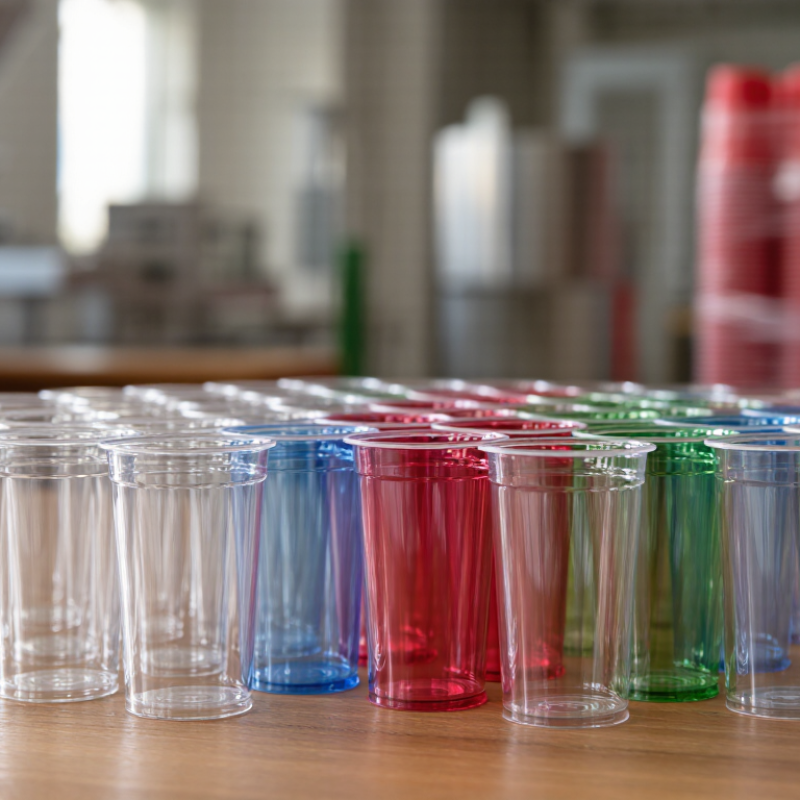
Beer pong glasses are usually lightweight, wide-rimmed cups rather than traditional drinking glasses. Their tapered shape helps them nest for storage, while a flat base keeps them steady on a table. Many party cups hold around 16 ounces, giving players a familiar target size. The exact dimensions vary, so “standard” does not always mean identical. Some are made from polypropylene or PET; others use paper or reusable materials. Each choice changes stiffness, feel, and cleanup. A thin cup can dent when handled roughly. That small detail matters.
Material and manufacturing quality separate reliable cups from flimsy ones. Look for a smooth rim, even walls, and a base that sits flat. Grand View Research’s Disposable Tableware Market report estimated the global market at about US$39.5 billion in 2022, with projected growth through 2030. This broad category includes many products, not beer pong cups alone, so it offers market context rather than a direct cup-demand measure. Still, it reflects the scale of disposable tableware production and the value buyers place on practical formats. Appearance matters, but performance matters more.
Tip: Press the cup’s side gently and check whether it springs back. Test a few on a flat surface before buying in bulk. One overlooked issue: cups that stack tightly can be frustrating to separate.
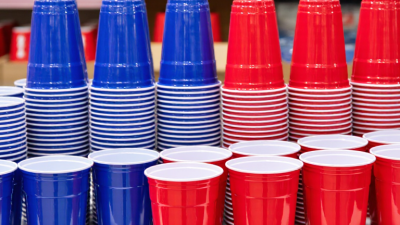
China is a major manufacturing hub for beer pong glasses because it combines plastics production, mold making, printing, and packaging in established industrial regions. A supplier can often source food-contact plastic, create a cup mold, and arrange carton production through nearby partners. That reduces handoffs and can shorten development time.
Scale matters. Factories producing cups for several markets can spread mold and setup costs across larger runs, keeping unit prices competitive. Buyers can request different capacities, rim shapes, colors, or printed measurement lines. During sampling, check that cups stand steadily on a flat table and that rims feel smooth. Small details affect handling.
Not every factory offers the same consistency. Ask how it checks dimensions, color variation, and packing quantities, and request a sample from the intended production material. A glossy sample may not match a later batch exactly. That gap deserves attention. Shipping distance, order size, and seasonal demand also change lead times, so written specifications and realistic schedules help prevent surprises. A low quote alone tells little about process control.
Chinese suppliers typically offer beer pong glasses in three practical formats: lightweight disposable cups, thicker reusable cups, and clear cups for events where visibility matters. Common materials include polypropylene (PP) and polyethylene terephthalate (PET). Buyers can request different capacities, rim widths, colors, and printed designs; stackable shapes also reduce carton volume. A 16-ounce cup is a familiar option, while larger sizes hold more liquid but may feel less stable on a crowded table. Small detail, big difference.
Some suppliers also offer paper cups or plant-based plastic alternatives. Ask for material specifications and food-contact documentation rather than relying on a “green” label alone. Grand View Research estimated the global disposable cups market at USD 13.34 billion in 2023, reflecting broad demand for single-use drinkware—not beer pong cups specifically. That distinction matters when comparing market figures with product claims. For sampling, check wall thickness, rim smoothness, and how easily cups separate when stacked. A cup can look sturdy in a catalog and still buckle when squeezed; testing a small batch is wiser than trusting photos.
Typical Beer Pong Cup Formats Offered by Chinese Suppliers
Nominal capacities are shown for representative cup formats, not supplier sales or market shares. Actual sizes vary by product; 16 US fl oz (about 473 mL) is a widely used beer pong cup size.
To evaluate Chinese beer pong glasses suppliers, compare verified production controls, not catalog photos. Ask whether cups are molded in-house and what resin or glass composition they use. Check how rim diameter, capacity, wall thickness, and color variation are measured. Request a recent inspection record and a pre-shipment sample. For reusable cups, specify repeated-wash and stacking tests. For disposable cups, ask for food-contact reports matching the exact material and colorant. A certificate alone is not product-level proof.
Logistics data can inform your decision, but it cannot replace a factory audit. The World Bank’s 2023 Logistics Performance Index ranked China 19th globally; that national score says little about one factory’s packing discipline. Check carton strength, cup counts, barcode accuracy, and drop-test results for your shipping route. OECD’s Global Plastics Outlook reports that only 9% of plastic waste was recycled worldwide in 2019. Treat recyclability claims carefully: request material identification and supporting evidence. Small mismatches can derail a launch.
Tips: Send the same drawing to three suppliers and compare sample measurements. Record tolerances, defect limits, lead time, and replacement terms in writing. One easy-to-miss detail: request photos of packed cartons, not just finished cups.
| Supplier Type or Evaluation Dimension | Potential Fit | What Buyers Should Verify | Practical Evaluation Method | Suggested Score Weight |
|---|---|---|---|---|
| Supplier Types to Consider (Categories, Not a Ranked Company List) | ||||
| Disposable plastic drinkware manufacturer | Standard cups and repeat orders where consistent product specifications are important. | Whether the supplier manufactures the cups itself; available materials, sizes, colors, production capacity, and export experience. | Request a factory profile, product specification sheet, samples, and a quotation tied to a clearly defined cup design. | Not scored separately |
| Custom injection-molding manufacturer | Custom shapes, tooling, product modifications, or orders requiring dedicated molds. | Tooling ownership, mold charges, mold maintenance, sample approval process, and terms for transferring or storing tooling. | Ask for a written tooling agreement and confirm that the approved sample matches the proposed production design. | Not scored separately |
| Promotional-product or printing supplier | Orders requiring printed artwork, event-specific designs, or customized packaging. | Print method, artwork proofing, color approval, print durability, and responsibility for any third-party production. | Approve a production-representative printed sample and clarify how print defects or color variation are handled. | Not scored separately |
| Export trading company | Buyers seeking help coordinating multiple product types, suppliers, or export arrangements. | Actual factory location, role in production and quality control, communication responsibilities, and traceability to the manufacturer. | Ask who makes the product, who inspects it, and which party is contractually responsible for specification compliance. | Not scored separately |
| Buyer Evaluation Scorecard | ||||
| Food-contact compliance | Confirms that the cup is suitable for its intended food or beverage contact and destination market. | Applicable regulations, material and colorant coverage, intended-use conditions, and test-report details. | Request current, product-relevant documentation. For products placed on the Chinese market, check applicability of GB 4806.7-2023 for plastic food-contact materials and articles. For exports, verify the requirements of the destination market. | 25% |
| Product specification and sample consistency | Helps ensure that the delivered cups match the buyer-approved design. | Material, capacity, dimensions, weight, color, rim finish, stacking, and any agreed print or packaging details. | Record specifications in the purchase order and compare a production sample with the approved reference sample. | 20% |
| Quality-control process | Shows how the supplier identifies and manages defects during production. | Incoming-material checks, in-process inspections, final inspection records, defect handling, and lot traceability. | Request a written inspection plan and sample inspection records; agree on acceptance criteria before production. | 15% |
| Production capability and lead time | Indicates whether the supplier can meet the order quantity and schedule. | Production location, available capacity, production schedule, peak-season constraints, and subcontracting arrangements. | Ask for a dated production and shipping schedule, and confirm how delays or production changes will be communicated. | 15% |
| Quotation and total landed cost | Enables a fair comparison between offers with different inclusions and shipping terms. | Unit price, tooling, printing, packaging, sampling, payment terms, Incoterms, and any separately quoted charges. | Compare like-for-like quotations using the same specifications, order quantity, packaging, and delivery terms. | 10% |
| Communication and order documentation | Reduces misunderstandings during sampling, production, and shipment. | Response clarity, specification confirmation, change-control process, commercial invoice, packing list, and agreed contract terms. | Use a written checklist and require written approval for changes to materials, dimensions, artwork, or schedule. | 10% |
| Packaging and shipment readiness | Helps protect cups in transit and supports efficient receiving and storage. | Packaging configuration, carton markings, shipping protection, carton dimensions, and export-document preparation. | Confirm packaging details in advance and review carton specifications against the buyer’s transport and warehouse needs. | 5% |
| Total suggested score weight | Apply the weights to each supplier’s evidence-based score. A higher score indicates a stronger fit for the buyer’s stated requirements; it does not represent an independent ranking of Chinese suppliers. | 100% | ||
Leading beer pong glass suppliers in China stand out through repeatable production, clear quality records, and responsive sampling—not just low prices. China’s National Bureau of Statistics reported about 74.9 million tonnes of plastic products in 2023, across many product categories. This shows broad manufacturing capacity, but it does not measure beer pong cup output. Buyers should compare suppliers using the same checklist.
Ask for samples from regular production, not only showroom pieces. Check rim smoothness, cup weight, stacking, and whether printed markings remain legible after washing. Consistency matters. Request material specifications and relevant food-contact test reports, then confirm that documents match the exact cup and material being quoted. A polished sample can still hide uneven batches.
A capable supplier should explain mold options, color matching, carton quantities, and lead times in writing. The International Organization for Standardization’s quality-management framework, ISO 9001, can offer useful evidence of documented processes, but certification alone does not guarantee product quality. A small pilot order helps reveal packing damage and size variation. It may cost more upfront. Still, that check can expose problems before a large shipment is approved.