
Choosing a China Top Toy Packaging Box Supplier for Global Buyers requires more than comparing prices. The right partner should understand children’s products, retail presentation, shipping conditions, and responsible manufacturing. A reliable Toy Packaging Box supplier can turn a basic concept into packaging that protects the product and strengthens its shelf appeal.
Experienced suppliers usually support the full development process. They review artwork, recommend suitable paperboard, and prepare structural samples before mass production. Details matter. A smooth matte finish, secure inserts, and clean folding lines can change the customer’s first impression. Strong factories also maintain quality checks for color accuracy, dimensions, printing, glue points, and carton strength. They should provide clear specifications, production samples, and inspection records.
Global buyers also need practical communication. A professional supplier explains minimum order quantities, lead times, packaging tests, and shipping arrangements without hiding limitations. Documentation should match the destination market and the product’s age-related requirements. Certifications and test reports must be relevant, current, and verifiable. Claims deserve evidence.
No supplier is flawless. Delays can happen. Artwork revisions may create extra cost, and sample results may expose weak design choices. Honest cooperation matters more than unrealistic promises. Buyers should ask direct questions, compare samples, and record approved standards before production begins. With careful evaluation, a China-based Toy Packaging Box partner can offer attractive design, stable quality, and scalable support for international toy brands. The final decision should balance creativity, protection, compliance, communication, and long-term reliability.
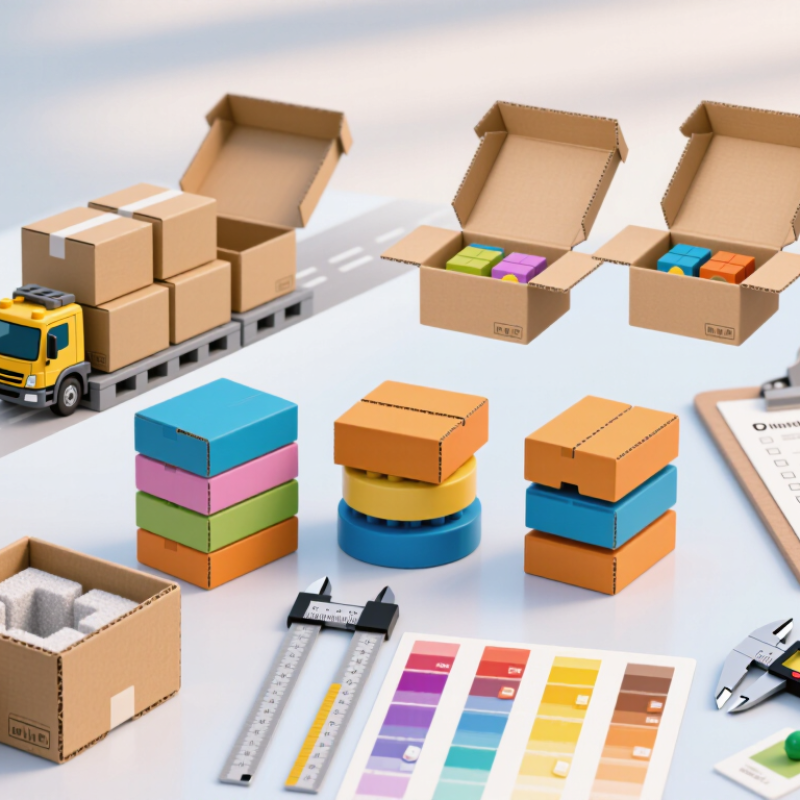
China has become a leading toy packaging box supplier because its manufacturing network combines materials, printing, and assembly in one sourcing market. Buyers can compare rigid boxes, folding cartons, drawer boxes, and recyclable paper options with practical speed. Many factories also support low-volume sampling before mass production. This helps purchasing teams inspect color, structure, coating, and child-safe edges early. Small details matter.
Experienced suppliers usually offer several paperboard grades and finishing methods. They can adjust box dimensions around a toy’s weight, shape, and accessories. Digital samples, physical prototypes, and pre-production checks reduce costly surprises. Some production teams also use automated cutting and folding equipment for consistent results. Skilled workers still inspect corners, hinges, and glued seams. Machines help, but judgment remains necessary.
China’s logistics infrastructure supports export orders through coordinated packing, warehousing, and shipping services. Suppliers familiar with international documentation can make communication more reliable. However, not every factory delivers the same quality. A low quotation may hide weak board, unclear testing, or rushed inspection. Buyers should request samples, confirm tolerances, review production photos, and record approval details in writing. I have found that clear specifications prevent more problems than persuasive sales language. Even then, packaging can fail if humidity, stacking pressure, or transport vibration receives too little attention. Careful sourcing requires patience.
| Evaluation Dimension | Common Industry Reference Data | What China-Based Suppliers Commonly Offer | Value for Global Toy Buyers |
|---|---|---|---|
| Paperboard Weight | 250–600 g/m² for many folding-carton applications | A broad selection of coated and uncoated paperboard grades for light, medium, and premium toy boxes. | Allows buyers to balance box strength, appearance, product protection, and shipping weight. |
| Corrugated Board Options | E-flute: approximately 1.5 mm; B-flute: approximately 3 mm; C-flute: approximately 4 mm | Single-wall corrugated structures are commonly available for mailer boxes, shipping cartons, and retail-ready packaging. | Supports different requirements for stacking strength, cushioning, folding performance, and transportation protection. |
| Printing Capability | CMYK process printing; spot-color printing when required | Offset lithographic printing is widely used for detailed illustrations, character artwork, instructions, and product information. | Enables consistent graphics and localized packaging artwork for multiple markets. |
| Surface Finishing | Water-based coating, gloss or matte aqueous coating, film lamination, embossing, and foil stamping | Suppliers generally provide several finishing combinations, subject to material compatibility and order quantity. | Helps improve visual appeal, scuff resistance, moisture resistance, and shelf presentation. |
| Structural Customization | Custom dielines, inserts, windows, handles, magnetic closures, and folding structures | Packaging can be adapted to product dimensions, accessory layouts, assembly needs, and retail display requirements. | Reduces empty space and helps protect toys, components, manuals, and small accessories during distribution. |
| Typical Sampling Time | Approximately 5–10 working days for standard prototypes | Digital samples, white samples, or pre-production samples may be used before mass production. | Allows buyers to verify dimensions, artwork, color, fit, and construction before approving production. |
| Typical Production Lead Time | Approximately 15–30 working days after artwork and specifications are approved | The actual schedule depends on material availability, finishing processes, order quantity, and factory workload. | Provides a planning reference for product launches, seasonal promotions, and replenishment cycles. |
| Minimum Order Quantity | Often about 500–3,000 pieces for custom printed boxes | Minimum quantities vary according to box size, printing method, material, finishing, and production setup. | Offers potential flexibility for product testing, limited editions, and different packaging sizes. |
| Quality-Control Checkpoints | Artwork proofing, material inspection, color checking, dimensional inspection, and carton drop or compression testing when applicable | A documented inspection process can be applied from pre-production approval through final packing. | Reduces the risk of print defects, incorrect dimensions, weak structures, and transit-related damage. |
| Packaging Sustainability | Recyclable paper-based structures; reduced-plastic and paper-based insert options | Material selection may include recycled content, FSC-certified paper when available, water-based coatings, and plastic-free inserts. | Supports retailer requirements, environmental policies, and consumer demand for more recyclable packaging. |
| Export Packing | Inner protection plus corrugated master cartons; palletization when required | Export cartons can be arranged according to product count, stacking limits, container loading, and destination handling conditions. | Improves warehouse handling and helps reduce crushing, moisture exposure, and damage during international transport. |
| Global Shipping Support | Sea freight, air freight, express delivery, and multimodal logistics are commonly used | Suppliers may provide carton dimensions, gross weight, packing lists, and shipment documentation for buyer-appointed or supplier-arranged logistics. | Makes it easier to compare landed costs and coordinate delivery with international production schedules. |
| Note: The figures shown are practical industry reference ranges rather than fixed guarantees. Final specifications, pricing, minimum order quantity, and lead time should be confirmed according to the box structure, materials, artwork, finishing, testing requirements, and delivery terms. | |||