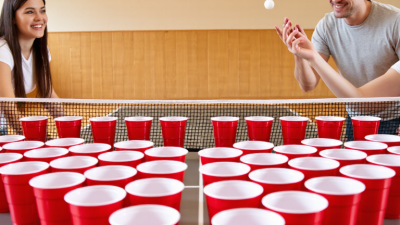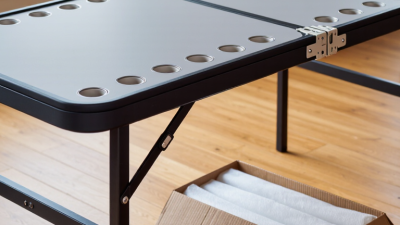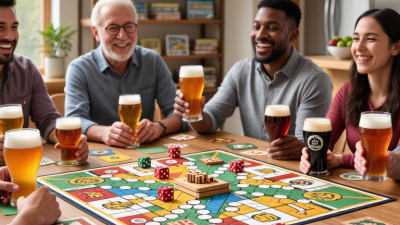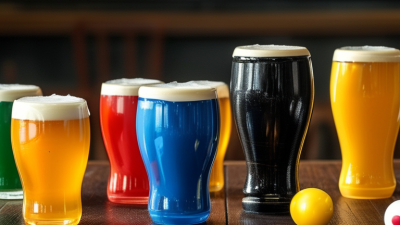
Global buyers are showing stronger interest in compact, social entertainment products. The Cup Pong Game fits this shift with simple rules, quick setup, and broad age appeal. It can turn a kitchen table, garden, or event booth into an interactive play area within minutes.
Industry data supports this wider opportunity. Circana’s 2023 global toy report recorded a 7% decline in toy sales across its measured international markets. However, games and puzzles remained important household entertainment categories, supported by family participation and repeat play. The NPD Group, now part of Circana, has also highlighted how affordable, screen-free products can attract value-conscious consumers. Grand View Research continues to identify online retail as a major channel for global toys and games, making product presentation, reviews, and shipping reliability increasingly important.
The details matter. Buyers often compare cup durability, ball consistency, rack stability, storage size, and cleaning convenience. A set that fits neatly into a cupboard may outperform a larger set with more accessories. Safety information and age guidance also build trust across different markets. There is no universal public dataset for Cup Pong Game sales, so rankings should not pretend to offer perfect market certainty. That limitation deserves attention. This guide evaluates ten practical game sets using usability, material quality, portability, buyer feedback, and international purchasing considerations. Results may differ by region, budget, and intended setting. Real-world testing remains valuable. A product that looks impressive online may feel unstable on a crowded table.
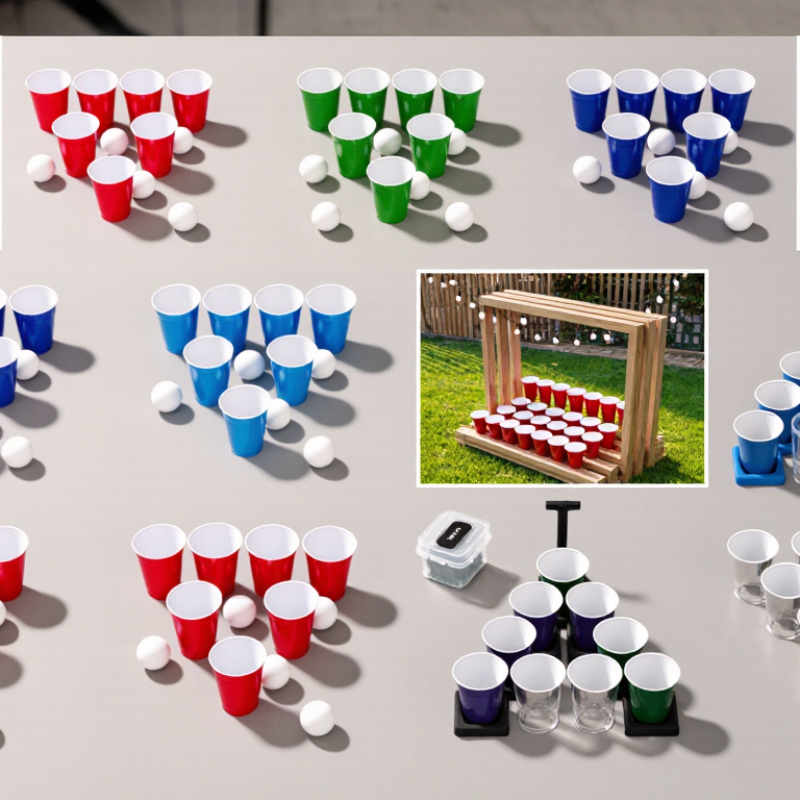
Cup pong is a simple target game using lightweight cups and a small ball. Players aim across a table, then remove cups after successful shots. The rules are easy to explain across languages. Setup takes only a few minutes. That simplicity helps global buyers serve parties, student events, family gatherings, and casual team activities. The game can also be played without alcohol, making it suitable for wider audiences.
The commercial appeal is practical, not merely trendy. Circana’s 2023 U.S. toy industry review recorded $28.6 billion in sales, despite an 8% decline. Buyers therefore need affordable, reusable products with clear value. Cup pong sets are compact, easy to pack, and generally cheaper to ship than bulky outdoor games. Newzoo’s 2024 Global Games Market Report estimated 3.42 billion players worldwide. Cup pong is not a digital game, but this figure reflects broad interest in accessible play. Still, demand should not be assumed. Cup quality, ball bounce, table stability, and cleaning instructions can strongly affect repeat orders.
Tips: Choose durable, food-contact-safe materials and request sample testing. Check cup dimensions, nesting efficiency, carton strength, and replacement-piece availability. Neutral colors often suit international buyers better. Include simple diagrams and multilingual instructions. Avoid promising “universal” appeal; regional preferences and event rules still matter. A lower price can help, but weak packaging may create expensive returns.
Cup pong is a social throwing game in which players toss or bounce a lightweight ball into cups arranged on a table. The comparison below focuses on practical purchasing factors, including contents, materials, packability, setup time, player capacity, and suitability for international distribution.
| Rank | Cup Pong Set Type | Best For | Typical Set Contents | Common Materials | Packed Dimensions | Approx. Net Weight | Recommended Players | Typical Setup Time | Global Buyer Advantages | Key Purchasing Consideration |
|---|---|---|---|---|---|---|---|---|---|---|
| 1 | Standard 20-Cup Party Set | Home parties | 20 reusable cups, 3 lightweight balls, storage bag, basic rules card | Polypropylene cups; polyethylene or ABS balls; polyester bag | Approx. 28 × 22 × 10 cm | 0.65 kg | 2–4 players | 3–5 minutes | Compact assortment with familiar gameplay and low packaging volume | Confirm cup capacity, rim shape, color assortment, and ball diameter before bulk ordering. |
| 2 | Reusable Outdoor Tournament Set | Outdoor events | 22 cups, 6 balls, cup rack or layout guide, carry case, rules card | Thicker polypropylene cups; molded plastic balls; nylon case | Approx. 35 × 25 × 15 cm | 1.10 kg | 4–8 players | 5–8 minutes | Durable components are better suited to repeated use at festivals and recreational venues | Ask for impact and leak testing if the set will be used outdoors or by rental operators. |
| 3 | Foldable Travel Cup Pong Set | Travel and camping | 20 collapsible cups, 3 balls, foldable layout mat, compact pouch | Thermoplastic elastomer or flexible PP cups; PE balls; polyester pouch | Approx. 26 × 20 × 8 cm | 0.55 kg | 2–4 players | 3–6 minutes | Reduced storage size can help lower dimensional shipping volume | Check that the folded cups recover their shape and stand securely on uneven surfaces. |
| 4 | LED Cup Pong Night Set | Nighttime entertainment | 20 translucent cups, 3 balls, LED modules or light bases, batteries if included | Translucent PP or PET cups; electronic LED components; plastic balls | Approx. 31 × 24 × 12 cm | 0.85 kg | 2–6 players | 5–8 minutes | Visual appeal supports seasonal, nightlife, and event-oriented retail sales | Battery type, battery regulations, water resistance, and lighting runtime must be verified. |
| 5 | Premium Weighted-Cup Set | Frequent indoor use | 20 weighted cups, 6 balls, rigid organizer tray, instruction guide | Thick-wall PP cups with weighted bases; ABS or PE balls | Approx. 34 × 26 × 16 cm | 1.45 kg | 2–6 players | 4–7 minutes | Stable cups reduce accidental tipping and may improve repeat-use durability | Weight distribution, cup nesting performance, and total carton weight affect landed cost. |
| 6 | Eco-Conscious Reusable Set | Sustainable retail | 20 reusable cups, 3 balls, recycled-fiber box, paper rules card | Recycled PP or certified bio-based plastic, paperboard packaging | Approx. 29 × 22 × 11 cm | 0.75 kg | 2–4 players | 3–5 minutes | Reusable construction can reduce reliance on single-use party cups | Request documentation for recycled content, material claims, inks, and packaging recyclability. |
| 7 | Family-Friendly Skill Set | Families and schools | 12 large cups, 6 soft balls, target markers, illustrated rules, storage box | Food-contact-grade PP cups; foam or soft PE balls; paperboard box | Approx. 32 × 24 × 13 cm | 0.90 kg | 2–6 players | 4–6 minutes | Larger cups and softer balls can make the game more accessible to younger users | Age grading, small-part warnings, ball softness, and applicable toy-safety requirements are important. |
| 8 | Compact Promotional Set | Events and giveaways | 10–12 cups, 2 balls, flat-pack carton or drawstring pouch, printed rules | PP cups; PE balls; paperboard or polyester packaging | Approx. 24 × 18 × 7 cm | 0.35 kg | 2–4 players | 2–4 minutes | Small pack size and low weight are suitable for promotional distribution and parcel fulfillment | Evaluate print durability, color consistency, and minimum order quantities for customized packaging. |
| 9 | Large-Format Event Set | Venues and rentals | 30–36 large cups, 8 balls, layout markers, heavy-duty carry bag, rules board | Thick PP or HDPE cups; PE balls; reinforced polyester bag | Approx. 45 × 32 × 22 cm | 2.20 kg | 4–10 players | 7–12 minutes | Higher capacity supports group participation and commercial entertainment use | Measure master-carton volume carefully because oversized packaging can increase freight charges. |
| 10 | Customizable Multi-Color Set | Retail collections | 20 cups in assorted colors, 3–6 balls, storage bag, customizable rules card | PP cups; PE or ABS balls; polyester or recycled-fiber packaging | Approx. 30 × 23 × 11 cm | 0.80 kg | 2–6 players | 3–6 minutes | Color assortment allows adaptation to seasonal collections and regional preferences | Approve pre-production samples for color matching, logo placement, and packaging translations. |
Specifications are representative purchasing benchmarks for commonly sold cup pong configurations. Exact dimensions, weights, materials, packaging, safety documentation, and shipping costs vary by supplier and should be confirmed with a pre-production sample.